1049 Results for "

Astragalus oleifolius DC.

" in MedChemExpress (MCE) Product Catalog:
Products (1049)

1049 Results for "Astragalus oleifolius DC." in MCE Product Catalog:

35
35 Publications Verification
Cat. No.: HY-N0431
CAS No.: 84687-43-4
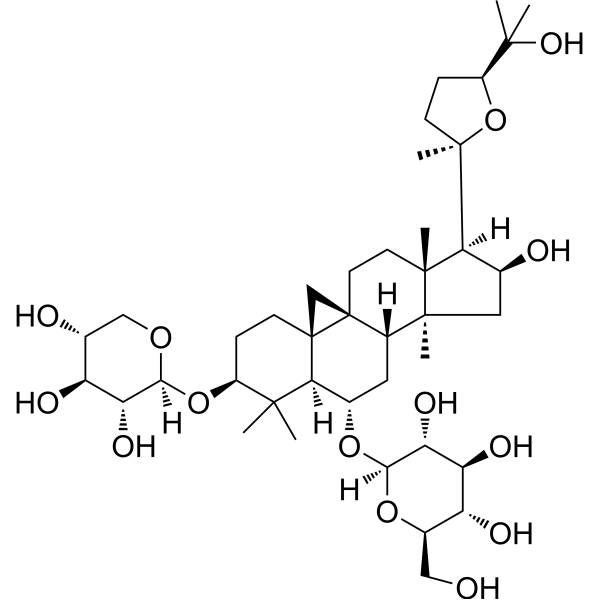
Astragaloside IV, an active component isolated from Astragalus membranaceus, suppresses the activation of ERK1/2 and JNK, and downregulates matrix metalloproteases (MMP)-2, (MMP)-9 in MDA-MB-231 breast cancer cells.
18
18 Cited Publications
Cat. No.: HY-13962
CAS No.: 1020149-73-8
Purity:  99.77%
Research Areas:  

Cancer

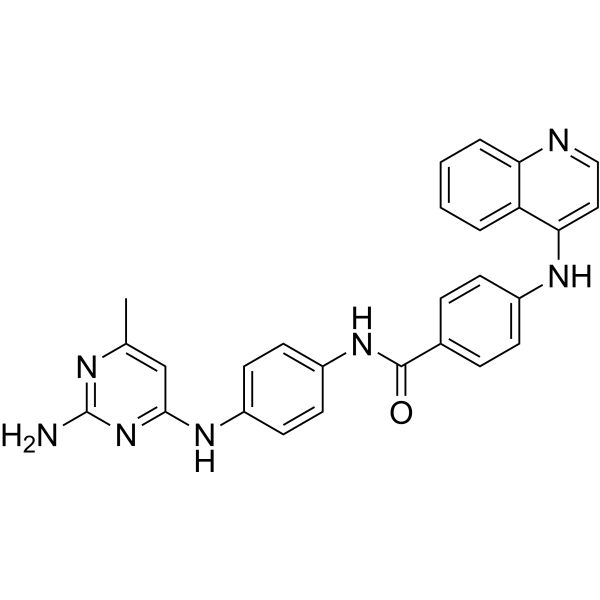
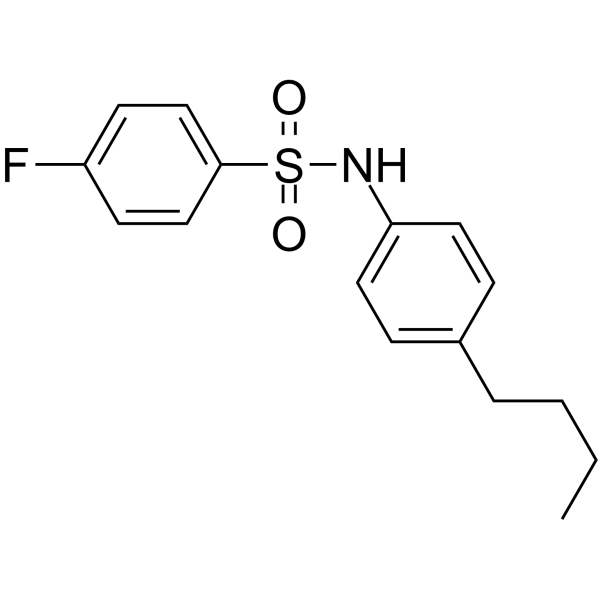
SGI-1027 is a DNA methyltransferase (DNMT) inhibitor, with IC50s of 7.5 μM, 8 μM, and 12.5 μM for DNMT3B, DNMT3A, and DNMT1 with poly(dI-dC) as substrate.
11
11 Cited Publications
Cat. No.: HY-128359
CAS No.: 2375564-55-7
Purity:  99.92%
Research Areas:  

Cancer

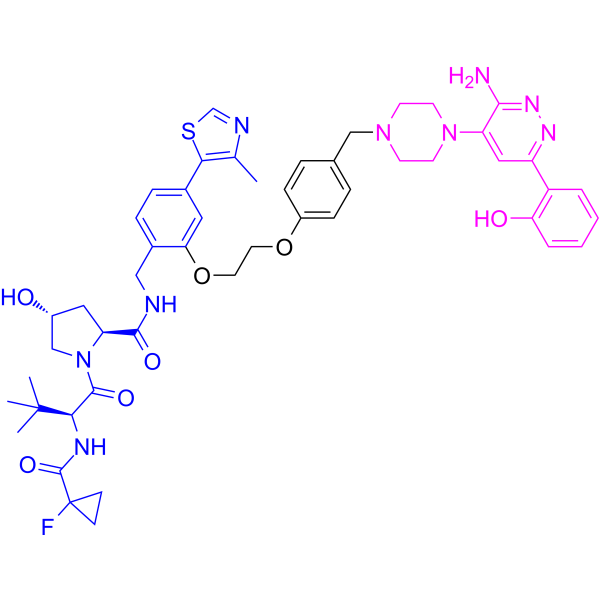
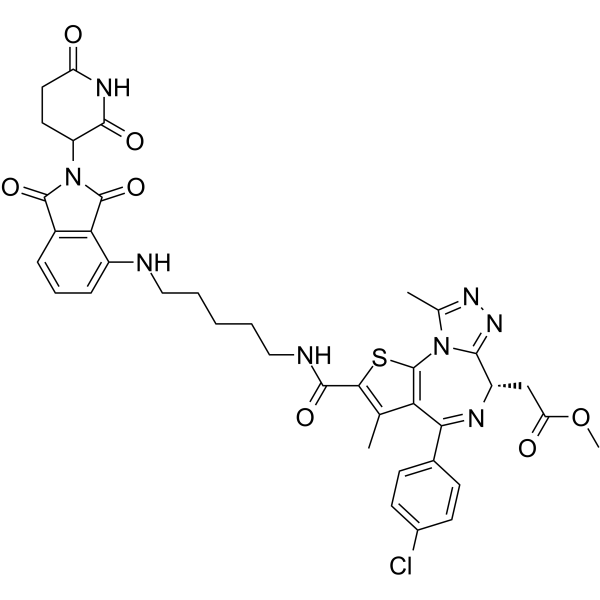
ACBI1 is a potent and cooperative SMARCA2, SMARCA4 and PBRM1 degrader with DC50s of 6, 11 and 32 nM, respectively. ACBI1 is a PROTAC degrader. ACBI1 shows anti-proliferative activity. ACBI1 induces apoptosis .
11
11 Cited Publications
Cat. No.: HY-N0935
CAS No.: 76494-51-4
Synonyms: Chuanxiongzine hydrochloride; Tetramethylpyrazine hydrochloride
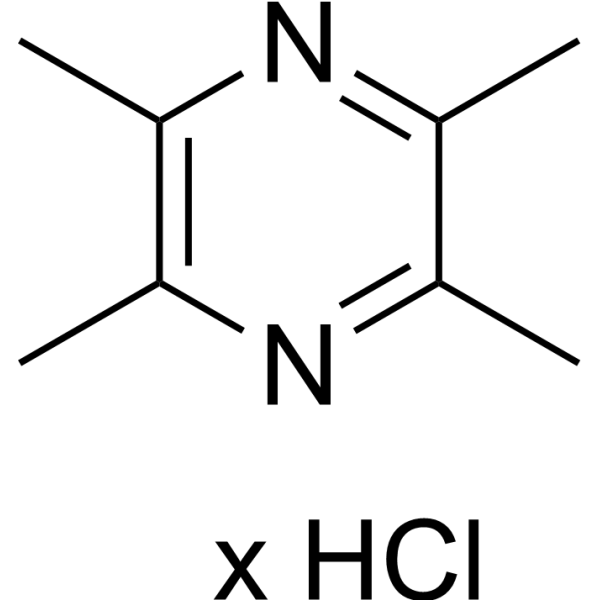
Ligustrazine hydrochloride is an orally active, blood-brain barrier-permeable alkaloid. It can be isolated from Ligusticum striatum DC. Ligustrazine hydrochloride reduces ROS, upregulates the levels of p-Akt/Akt and p-eNOS/eNOS, and decreases ALT and AST. It inhibits glutamate excitotoxicity, calcium overload, oxidative stress, ischemia-reperfusion injury and atherosclerotic plaque progression, enhances synaptic plasticity, and improves neurological function, cerebral infarct volume and brain water content. Ligustrazine hydrochloride possesses anti-inflammatory, antioxidant, lipid-lowering, endothelial protective and hepatoprotective activities. It can be used in studies related to ischemic stroke, cerebral ischemia-reperfusion injury and atherosclerosis .
9
9 Cited Publications
Cat. No.: HY-15594A
CAS No.: 929895-45-4
Purity:  98.99%
Synonyms: Phen-DC3 Triflate
Target:  

G-quadruplex

Research Areas:  

Cancer

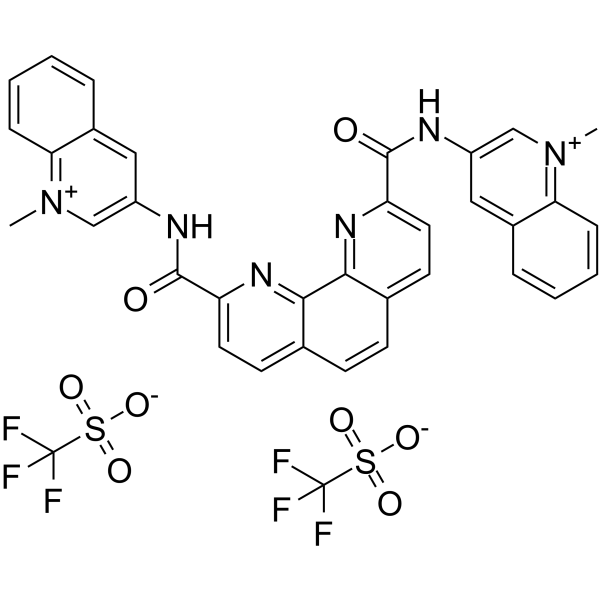
Phen-DC3 Trifluoromethanesulfonate is a G-quadruplex (G4) specific ligand which can inhibit FANCJ and DinG helicases with IC50s of 65±6 and 50±10 nM, respectively.
8
8 Cited Publications
Cat. No.: HY-101943
CAS No.: 10538-99-5
Purity:  ≥98.0%
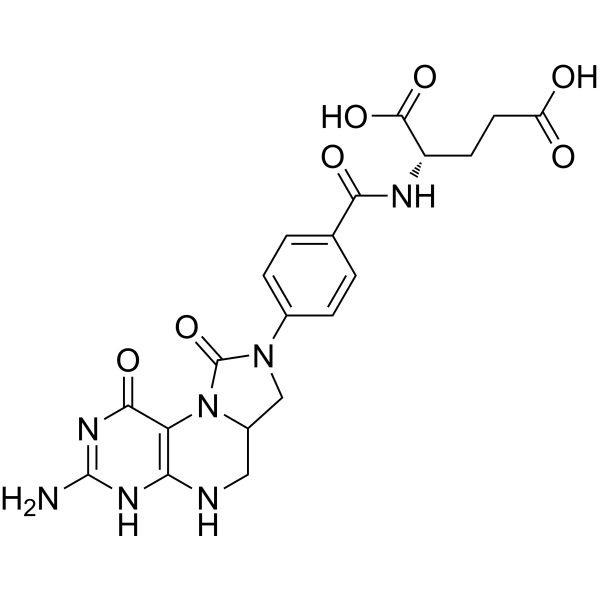
LY 345899 is a Folate analog and is a methylene tetrahydrofolate dehydrogenase (MTHFD1; DC301) and MTHFD2 inbhibitor with IC50 values of 96 nM and 663 nM, respectively and a Ki of 18 nM for MTHFD1 .
8
8 Cited Publications
Cat. No.: HY-119932
CAS No.: 2301916-69-6
Purity:  99.25%
Target:  

PROTACs FAK Akt

Research Areas:  

Cancer

PROTAC FAK degrader 1 (Compound PROTAC-3) is a selective and effective degrader of Fak PROTAC with a DC50 of 3.0 nM. PROTAC FAK degrader 1 reduces the ability of cancer cells to migrate and invade. PROTAC FAK degrader 1 can be used in the study of tumor .
6
6 Cited Publications
Cat. No.: HY-111621
CAS No.: 1872387-43-3
Purity:  99.53%
Target:  

Autophagy Apoptosis

Research Areas:  

Cancer

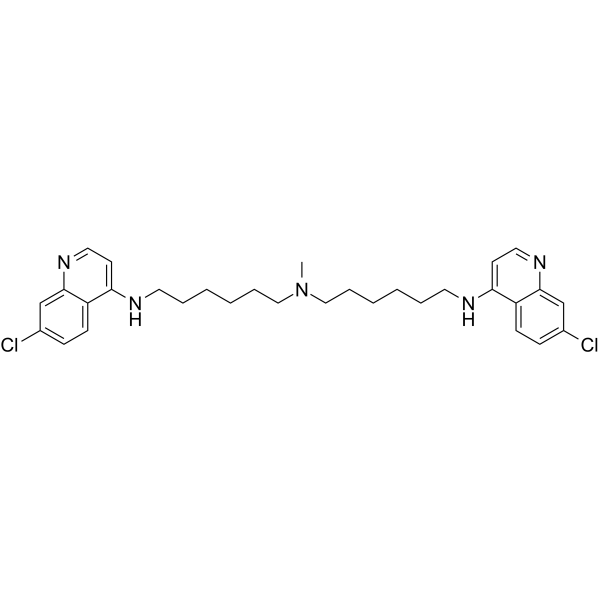
DC661 is a potent palmitoyl-protein thioesterase 1 (PPT1) inhibitor, inhibits autophagy, and acts as an anti-lysosomal agent. Anti-cancer activity .
6
6 Cited Publications
Cat. No.: HY-107636
CAS No.: 497061-48-0
Purity:  99.97%
Target:  

Apoptosis

Research Areas:  

Cancer

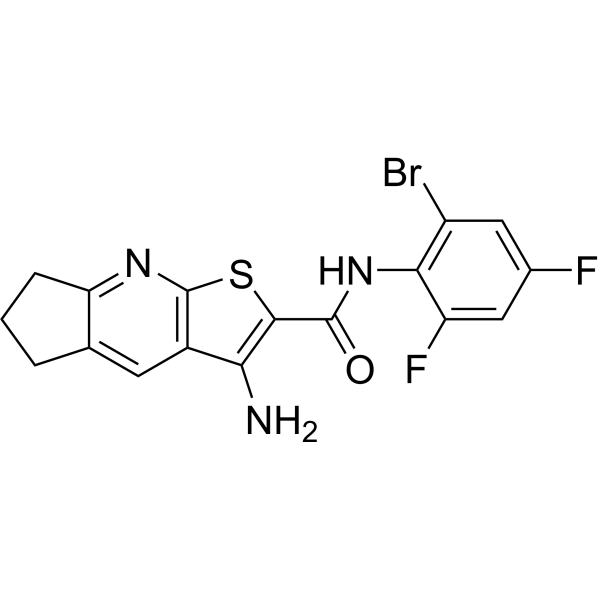
DC_AC50 is a dual inhibitor of Atox1 and CCS (copper chaperones). Inhibiting intracellular copper chaperones as a means of reducing/preventing acquired chemotherapy resistance .
6
6 Cited Publications
Cat. No.: HY-138642
CAS No.: 2229711-68-4
Purity:  99.60%
Synonyms: ARV-471
Research Areas:  

Cancer

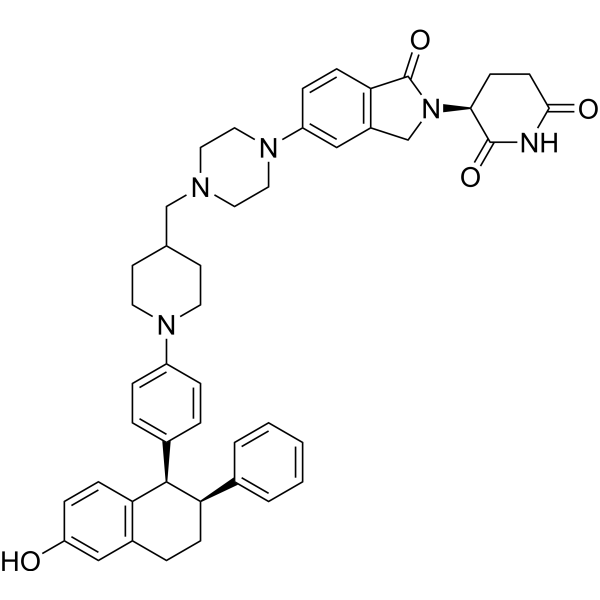
Vepdegestrant (ARV-471) is an orally active PROTAC estrogen receptor degrader against breast cancer. Vepdegestrant is a hetero-bifunctional molecule that facilitates the interactions between estrogen receptor alpha and an intracellular E3 ligase complex. Vepdegestrant leads to the ubiquitylation and subsequent degradation of estrogen receptors via the proteasome. Vepdegestrant robustly degrades ER in ER-positive breast cancer cell lines with a half-maximal degradation concentration (DC50) of about 2 nM .
5
5 Cited Publications
Cat. No.: HY-122562
CAS No.: 2231744-29-7
Purity:  98.35%
Target:  

PROTACs Btk

Research Areas:  

Cancer

MT-802 is a BTK PROTAC degrader. MT-802 degrades wild-type BTK (DC50 = 14.6 nM) and BTK mutants including E41K, C481S (DC50 = 14.9 nM), C481R, C481Y, C481T, C481F, L528W, and inhibits their Y223 phosphorylation. BI-4732 can be used for the study of Ibrutinib (HY-10997)-resistant chronic lymphocytic leukemia (CLL). (Pink: BTK ligand (HY-150885), Blue: CRBN Ligand (HY-14658), Black: Linker (HY-141371), E3 ligase ligand-linker conjugate (HY-176340)) .
4
4 Cited Publications
Cat. No.: HY-154919
Purity:  99.52%
Research Areas:  

Endocrinology Cancer

DC-Y13-27 is a DC-Y13 derivative and YTHDF2 inhibitor (KD: 37.9 μM). DC-Y13-27 inhibits YTHDF2, restores FOXO3 and TIMP1 protein levels, and reduces MMP1/3/7/9 expression. DC-Y13-27 induces Pyroptosis and increases IL-1β secretion. DC-Y13-27 reduces intervertebral disc degeneration and enhances the response to radiotherapy in colon cancer and melanoma. DC-Y13-27 has antitumor activity against breast cancer .
4
4 Cited Publications
Cat. No.: HY-N0119
CAS No.: 18916-17-1
Synonyms: Naringin DC
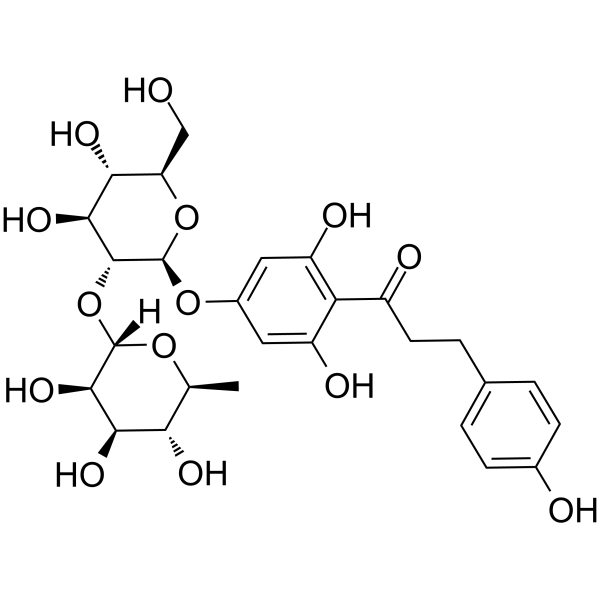
Naringin Dihydrochalcone is an artificial sweetener derived from naringin. Naringin is a major flavanone glycoside obtained from tomatoes, grapefruits, and many other citrus fruits. Naringin exhibits biological properties such as antioxidant, anti-inflammatory, and antiapoptotic activities. Naringin suppresses NF-κB signaling pathway.
4
4 Cited Publications
Cat. No.: HY-N0154
CAS No.: 20702-77-6
Synonyms: Neohesperidin DC; NHDC
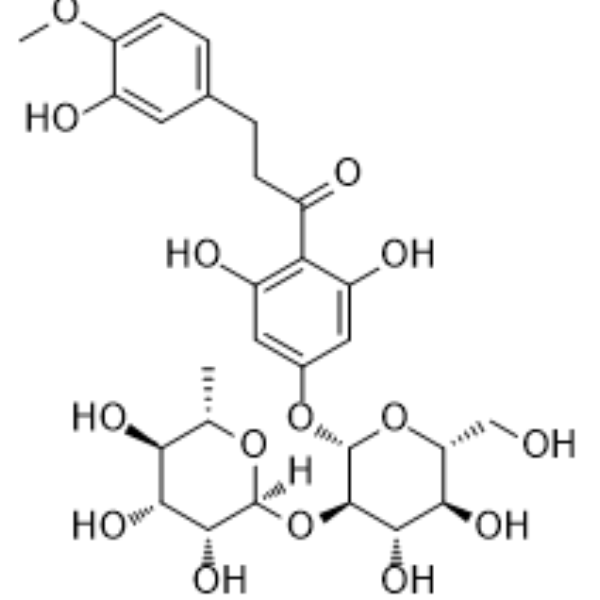
Neohesperidin dihydrochalcone is a synthetic glycoside chalcone, is added to various foods and beverages as a low caloric artificial sweetener.
4
4 Cited Publications
Cat. No.: HY-123844
CAS No.: 1883863-52-2
Purity:  99.94%
Research Areas:  

Cancer

dBET57 is an effective and selective BRD4BD1 degrader based on PROTAC technology, with the ability to induce cell apoptosis and anti-tumor activity. dBET57 mediates the recruitment of the E3 ubiquitin ligase CRL4 Cereblon, showing a DC50/5h value of 500 nM for BRD4BD1 .
4
4 Cited Publications
Cat. No.: HY-N0498
CAS No.: 13063-04-2
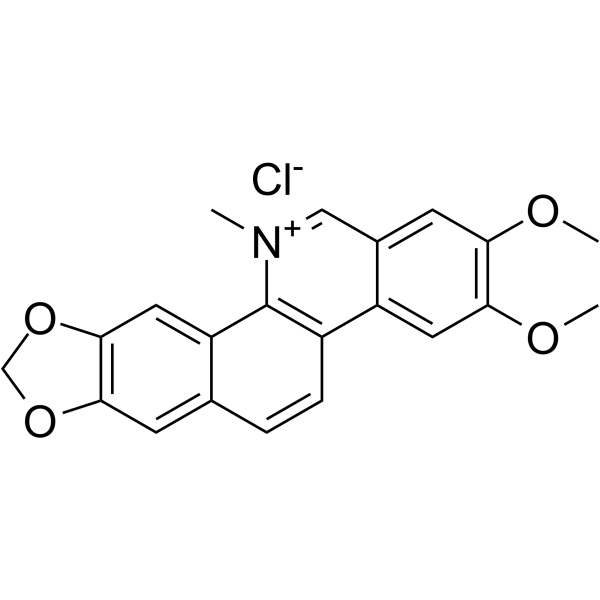
Nitidine chloride, a potential anti-malarial lead compound derived from Zanthoxylum nitidum (Roxb) DC, exerts potent anticancer activity through diverse pathways, including inducing apoptosis, inhibiting STAT3 signaling cascade, DNA topoisomerase 1 and 2A, ERK and c-Src/FAK associated signaling pathway, also has anti-inflammatory activity. Nitidine chloride inhibits LPS-induced inflammatory cytokines production via MAPK and NF-kB pathway .
3
3 Cited Publications
Cat. No.: HY-101906
CAS No.: 346692-04-4
Purity:  99.57%
Research Areas:  

Metabolic Disease

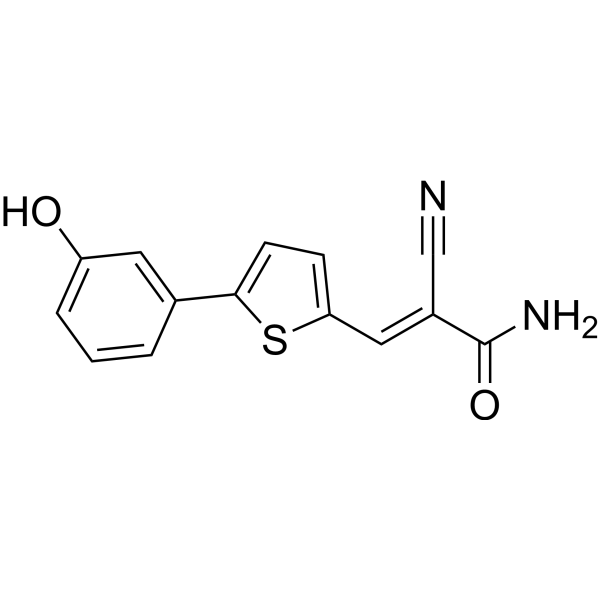
DC260126 is a potent antagonist of GPR40 (FFAR1). DC260126 dose-dependently inhibits GPR40-mediated Ca 2+ elevations stimulated by linoleic acid, oleic acid, palmitoleic acid and lauric acid (IC50: 6.28, 5.96, 7.07, 4.58 μM, respectively) . DC260126 could protect MIN6 β cells from palmitate-induced ER stress and apoptosis .
3
3 Cited Publications
Cat. No.: HY-122826
CAS No.: 2243076-67-5
Purity:  98.90%
Research Areas:  

Cancer

ZXH-3-26 is a PROTAC connected by ligands for Cereblon and BRD4 with a DC50/5h of 5 nM. The DC50/5h refers to half-maximal degradation after 5 hours of treatment of ~ 5 nM .
3
3 Cited Publications
Cat. No.: HY-141512
CAS No.: 2705844-82-0
Purity:  98.97%
Target:  

PROTACs Aurora Kinase

Research Areas:  

Cancer

JB170 is a potent and highly specific PROTAC-mediated AURORA-A (Aurora Kinase) degrader (DC50=28 nM) by linking Alisertib, to the Cereblon-binding molecule Thalidomide. JB170 preferentially binds AURORA-A (EC50=193 nM) over AURORA-B (EC50=1.4 µM). JB170-mediated S-phase arrest is caused specifically by AURORA-A depletion. JB170 has excellent ability to inhibit non-catalytic function of AURORA-A kinase .
3
3 Cited Publications
Cat. No.: HY-123921
CAS No.: 2230821-27-7
Purity:  99.98%
Target:  

PROTACs EGFR

Research Areas:  

Cancer

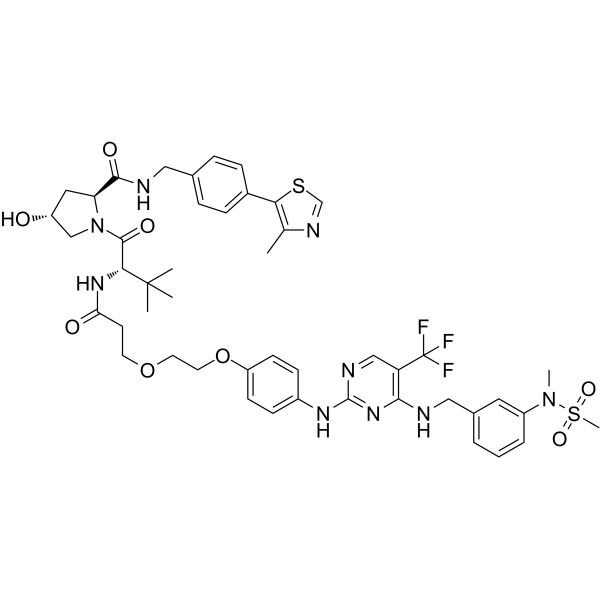
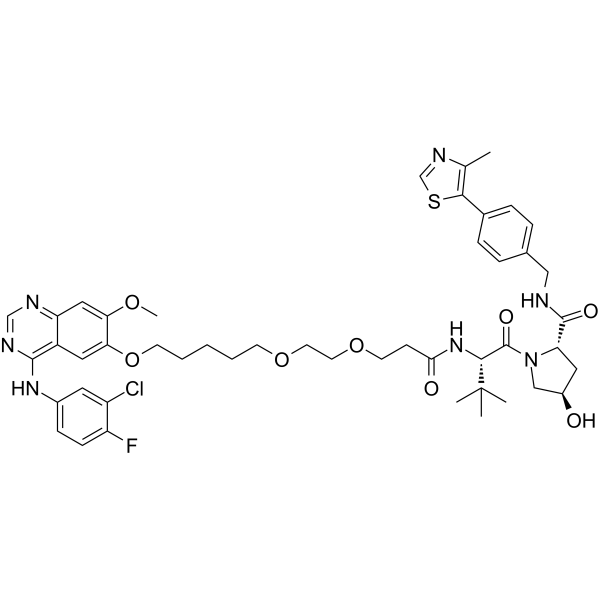
Gefitinib-based PROTAC 3, conjugating an EGFR binding element to a von Hippel-Lindau ligand via a linker, induces EGFR degradation with DC50s of 11.7 nM and 22.3 nM in HCC827(exon 19 del) and H3255 (L858R mutantion) cells, respectively .

